The OSHA compliance checklist is an essential tool for businesses aiming to foster a safe and compliant workplace environment. It not only ensures adherence to regulations but also promotes a culture of safety that benefits employees and employers alike. Understanding the importance of OSHA compliance can change the dynamics of a workplace, making it a priority for organizations across various industries.
This checklist is a comprehensive guide that highlights key components necessary for maintaining compliance with OSHA standards. By exploring the benefits it brings, the steps to create an effective checklist, and the innovative practices that can be integrated, businesses can significantly enhance their safety measures and employee well-being.
OSHA Compliance Checklist Overview
OSHA compliance refers to the adherence to standards set by the Occupational Safety and Health Administration, which is crucial for ensuring workplace safety and health. For businesses, compliance is not only a legal obligation but also a commitment to protecting employees from workplace hazards.Key components of an OSHA compliance checklist include safety protocols, training requirements, and hazard assessments. These checklists serve as a roadmap for organizations to identify potential risks and implement measures to mitigate them.
Industries such as construction, manufacturing, healthcare, and hospitality often require OSHA compliance due to their inherent risks.
Importance of OSHA Compliance
Maintaining OSHA compliance offers several significant benefits for businesses. These advantages include:
- Reduction of workplace accidents and injuries, leading to a safer work environment.
- Improved employee morale and retention as workers feel valued and protected.
- Potential reduction in insurance premiums as a result of fewer claims.
Statistics show that organizations implementing OSHA standards have seen a substantial decrease in workplace incidents. For instance, companies that embraced these standards reported a 40% reduction in injuries over a three-year period.
Steps to Create an OSHA Compliance Checklist
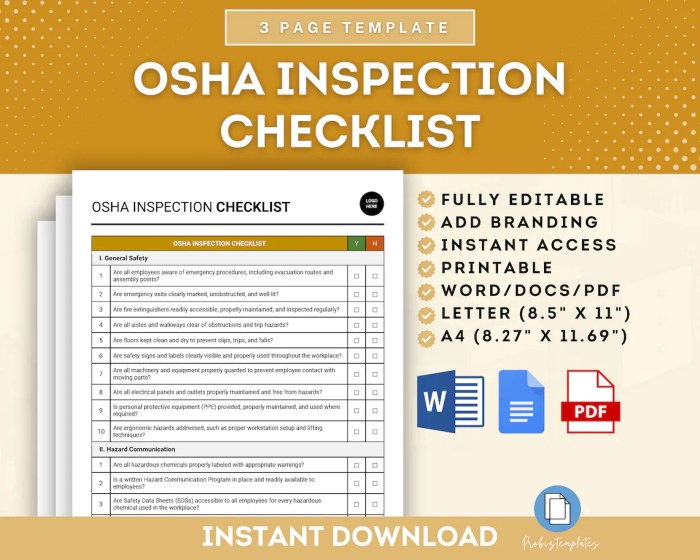
Developing an OSHA compliance checklist involves a systematic approach. The first step is to assess the specific needs and risks associated with your industry. Necessary resources for this process include OSHA guidelines, industry safety manuals, and input from safety professionals.A basic template for an OSHA compliance checklist can include:
- Workplace hazard identification and assessment
- Employee training records
- Emergency action plan
Utilizing this template allows businesses to customize their checklists to meet their unique safety requirements.
Business Innovation and OSHA Compliance
Innovative practices can significantly aid in achieving OSHA compliance. For example, the adoption of smart technologies, such as wearable safety devices and real-time monitoring systems, can enhance safety standards in the workplace. These technologies provide immediate feedback on potential hazards, enabling quick corrective actions.Businesses can incorporate safety innovations by integrating these technologies into their daily operations. For instance, using drones for site inspections in construction can reduce human error and ensure compliance with safety regulations.
Risk Management and OSHA Compliance
There is a close relationship between risk management and OSHA compliance. Identifying risks and hazards in the workplace is essential to create a safe environment. This involves conducting regular audits and safety assessments to pinpoint potential dangers.Integrating risk management strategies with OSHA standards can be achieved through:
- Establishing a comprehensive safety program
- Providing ongoing employee training
- Implementing corrective measures for identified risks
This holistic approach enhances overall workplace safety and fosters a culture of compliance.
Workplace Communication and OSHA Compliance

Effective communication is vital for ensuring OSHA compliance. It is important to create a culture where safety information is openly shared among all employees. This can be achieved through regular safety meetings and accessible documentation on safety protocols.Training employees on OSHA standards can be facilitated through:
- Interactive workshops
- Online training modules
- Regular safety drills
Additionally, creating a communication plan to share compliance updates with staff helps maintain awareness and engagement in safety practices.
Team Building and Safety Culture
Team-building activities can significantly foster a safety culture related to OSHA compliance. Engaging employees in safety-themed exercises, such as emergency response simulations, reinforces the importance of working together to maintain a safe environment.Examples of team-building exercises include:
- Safety scavenger hunts that educate while engaging
- Collaborative problem-solving workshops to address potential hazards
Management plays a crucial role in promoting a safety-first environment by leading by example and supporting safety initiatives.
Small Business OSHA Compliance Strategies
Small businesses can implement specific strategies to ensure OSHA compliance, such as conducting regular safety training and utilizing available resources for guidance. Common challenges faced by these businesses include limited budgets and lack of dedicated safety personnel.To overcome these challenges, small businesses can:
- Leverage online OSHA resources and training programs
- Network with local businesses for shared safety training initiatives
Accessing resources like OSHA consultation programs can provide valuable assistance in navigating compliance requirements.
Marketing Directly Related to Safety Compliance
Emphasizing a business’s commitment to OSHA compliance can enhance its marketing strategies. Highlighting safety initiatives not only builds customer trust but also strengthens brand reputation. Examples of effective marketing strategies can include:
- Showcasing safety certifications in promotional materials
- Sharing testimonials from employees about safety practices
Case studies of businesses that successfully marketed their safety initiatives demonstrate how compliance can create a competitive advantage in the marketplace.
Training and Development for OSHA Compliance
Implementing training programs focused on OSHA compliance is essential across various industries. Ongoing education ensures that employees are aware of safety standards and best practices.To evaluate the effectiveness of training programs, businesses can refer to a checklist that includes:
- Employee feedback on training sessions
- Assessment of incident reports before and after training
This approach helps organizations identify areas for improvement and reinforces the importance of safety education.
Business Outsourcing and OSHA Compliance
Outsourcing can have a significant impact on maintaining OSHA compliance. It is crucial for businesses to ensure that third-party vendors adhere to safety standards. Best practices for compliance when working with outsourced partners include conducting thorough due diligence and requiring safety certifications.Guidelines for evaluating the safety practices of outsourced partners can consist of:
- Reviewing safety history and compliance records
- Establishing clear safety expectations in contracts
These steps help mitigate risks associated with outsourcing and promote a culture of safety.
Restaurant Industry and OSHA Compliance
The restaurant industry faces unique OSHA compliance challenges, including hazards related to food handling, equipment, and slips and falls. A tailored OSHA compliance checklist for restaurants may include:
- Proper storage and handling of hazardous materials
- Employee training on kitchen safety
Key training areas for restaurant staff related to OSHA standards involve emergency procedures and proper equipment usage to prevent accidents.
Sales Management and OSHA Compliance
Sales teams can effectively communicate safety standards to clients by integrating these standards into their sales presentations. Sales management has a crucial role in promoting OSHA compliance by emphasizing safety as a value proposition.Strategies for integrating safety compliance into sales presentations include:
- Highlighting safety certifications and compliance in discussions
- Providing clients with documentation of safety practices
By doing so, businesses can build credibility and trust with their clients.
Workplace Safety Initiatives
Innovative workplace safety initiatives can align with OSHA compliance, enhancing overall safety standards. Successful safety programs often involve employee participation and feedback.Examples of successful safety programs include:
- Incentive programs for employees who report safety hazards
- Safety ambassadors who promote compliance within teams
The role of employee involvement in safety initiatives is critical, as it fosters a culture of accountability and proactive safety measures.
Future Trends in OSHA Compliance
Upcoming trends in OSHA regulations suggest a greater emphasis on technology and data-driven safety practices. The integration of artificial intelligence and machine learning is expected to transform compliance monitoring in the workplace.Potential impacts of technology on OSHA compliance include:
- Real-time data analytics for hazard identification
- Enhanced training through virtual reality simulations
Businesses will need to adapt to these changing safety standards to maintain compliance and ensure employee safety.
Final Thoughts
In conclusion, an OSHA compliance checklist serves as a roadmap for businesses seeking to prioritize workplace safety. As organizations embrace these standards, they not only mitigate risks but also foster a positive work environment that enhances employee morale and productivity. The journey towards compliance may require effort and innovation, but the rewards of a safe workplace are undeniably worth it.
FAQ Resource
What is the purpose of an OSHA compliance checklist?
The purpose of an OSHA compliance checklist is to ensure that businesses follow safety regulations, identify potential hazards, and implement necessary measures to protect employees.
How often should an OSHA compliance checklist be reviewed?
An OSHA compliance checklist should be reviewed regularly, at least annually, or whenever there are changes in regulations, workplace conditions, or procedures.
Can small businesses benefit from OSHA compliance?
Yes, small businesses can significantly benefit from OSHA compliance by reducing accidents, improving employee morale, and potentially lowering insurance costs.
What resources are available to help businesses with OSHA compliance?
Various resources, including OSHA’s website, industry associations, and safety consultants, are available to assist businesses in understanding and achieving compliance.
Are there penalties for non-compliance with OSHA standards?
Yes, businesses that fail to comply with OSHA standards may face penalties, including fines, legal action, and increased scrutiny from regulatory agencies.